A clinic protocol in VR
Daily activities after stroke are repeated in virtual reality. What looks like a game is a treatment session.
MOTUS
VR and AI-supported neurological rehabilitation.
A rehabilitation system for hemiplegia patients using virtual reality, motion capture and artificial intelligence.
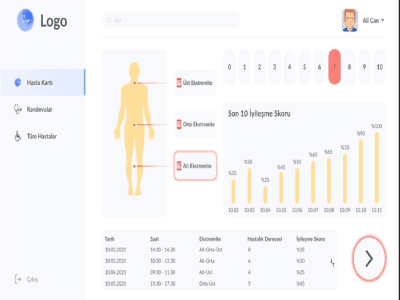
MOTUS aims to restore daily activities after stroke. Treatment protocols are delivered in a VR environment.
The clinician enters patient data, the affected side and severity. A reinforcement-learning algorithm proposes rehabilitation movements.
23 inertial units record motion; Unity 3D games calculate success rates. The clinician compares performance by week, month and year.
Daily activities after stroke are repeated in virtual reality. What looks like a game is a treatment session.
Inertial units log the exercise. Success rests on measurement, not impression.
Paresis side and grade are entered; a movement set is produced and followed week by month.
The algorithm tightens or eases sessions as the patient progresses.
No PDF is online for this product yet. We can send it to you.
Request documents01
We plan the layout, power and daily routine with you.
02
The robot is installed, tested and your team is trained on site.
03
Service, spare parts and remote support stay with you.
Neurological rehabilitation of adult and paediatric hemiplegia patients.